I am not sure if I read the same book that others read. I say this based on the comments I heard. I didn't find anything that shocking or horrifying in this work. There was no big reveal. Overall I thought it was okay. A nice collection of stories that examines society as a whole. I won't be at the meeting, but feel free to tweet me your opinions.
-Knsstxs

As seen in The New Yorker!
Sunday, May 29, 2016

Friday, February 26, 2016
PBR Book Club Announces Our Full Spring Slate!
We may not (ever) have a Wiki page, but nonetheless we remain a REAL book club which sometimes appears halfway professional and plans things in advance.
Here's what is on tap for spring. (Apparently we have an oral fixation).
March: Zadie Smith's White Teeth. It seems that not a single person in PBR Book Club has read this practically canonical post-colonial tome? Well, hop to it. Hopefully it doesn't feel TOO much like course work.

April: James Hannaham's Delicious Foods. This novel is partly narrated by crack cocaine. Will this be the most unusual narrator we've encountered in any selection so far?

May: Han Kang's The Vegetarian, a "mesmerizing mix of sex and violence" that may well permanently scar us all.

All that AND the possible return of a two-month summer "big book" read? It's a good time to join PBR Book Club.
PBR Book Club Goes Normcore; or, Organization is So Hip!
PBR Book Club has gotten so organized, what is evening happening?!
This February we tried something new and crazy — Nog and I brainstormed some future picks in advance, and then we all discussed them calmly and collectively at the Tap as a group, arriving at a consensus for April and May picks. I know.
PBR Book Clubbers: this living list lives here for you to check out at any time. Hit me up with ideas for anything you wanna add, and if it's a good fit to be a contender for us, I'll add it. Then, every month, we can choose from the pool of options after we're all drunk on PBR.
We're also making an effort to be more inclusive with our picks this year, so that's exciting too.
high five,
your fearless co-captain, Smalls
Sunday, January 31, 2016
February Selection: H is for Hawk
What?? A memoir? Does this mark the first time PBR Book Club has tackled this venerable genre? Well, that depends on how you define our pal McClanahan's Crapalachia, which ended with a meta-admission that the author had manufactured much of its memoir-ness.
At any rate, February's read is Helen Macdonald's much-praised "H is for Hawk." The New Yorker review says the book is "one part grief memoir, one part guide to raptors, and one part biography of T. H. White, who chronicled his maiden effort at falconry in “The Goshawk,” written just before he began work on 'The Once and Future King.'"
Perhaps we can get one of Kansas' 50 licensed falconers to come and chat with us? Or at least get the film club back together for a screening of Ladyhawke.
See you at the Tap for H is for Hawk (and remember that PBR, as always, is for Pabst Blue Ribbon).

Monday, January 4, 2016
2016 PBR Book Club Update and January Selection: Panic in a Suitcase
Readers, we're in our fourth year of PBR Book Club and we remain more-or-less functional. We still meet on the last Tuesday of each month at the Taproom. We still Skype with authors sometimes. We still have no clear rules on how to choose the monthly selections and usually just yell until others give in. But we DO have swanky new press photos (see below) that will almost certainly NOT help us in our never-ending quest to get a Wiki page (why do they hate us??).
The January selection is Yelena Akhtiorskaya's Panic in a Suitcase. What's the plot? Let's turn to the Guardian review:
"In fact, there barely is a plot in Panic in a Suitcase. That's not a criticism: what we get instead of a sweeping story are a multitude of exuberant set pieces about modern émigré life, animated by Akhtiorskaya's insider knowledge and her offbeat way with words."
Good enough! See you at the Tap.
[Your humble admin also dares you to join him in reading Garth Risk Hallberg's 900 page "Proustian epic" City on Fire, which is about 1977 New York and intertwines its sprawling plot with handwritten letters and excerpts of zines written by characters....this may take most of the year to finish].

Wednesday, October 28, 2015
November Selection: John Darnielle's Wolf in White Van
Oh, I'm hyped about October's selection (Abby's pick): the debut novel by "America's best non-hip-hop lyricist:" John Darnielle, of Mountain Goats fame.
Wolf in White Van was nominated for a National Book Award last year and the NY-Times book review calls it a "strange and involving novel...about alienation and despair and the search for meaning, which Sean finds in a postapocalyptic role-playing game he invents, turns into a business and administers in analog fashion, by exchanging letters with its players."
Perhaps we can partner up with Wonder Fair's Letter Writing Club in some fashion as we read this one?
And make sure to listen to A LOT of Mountain Goats' this month as you read. Here's my favorite: "New Chevrolet in Flames."
"...your mouth is sweeter
Than wine and has
A more complicated history
Than the American South."

Thursday, October 1, 2015
October Selection: Octavia Butler's The Parable of the Sower
"Butler's prose, always pared back to the bone, delineates the painful paradoxes of metamorphosis with compelling precision. In 1993, she published Parable of the Sower, a chronicle of low-rise dystopia set in the southern California suburbs of 2024." (from The Guardian)
Remember when these posts were written by the people who chose the books? That probably made more sense. Anyway, October's selection is Octavia Butler's 1993 The Parable of the Sower, so prepare to get your dystopia on once again! It's the first in a two-part series by the legendary sci-fi writer, so perhaps we'll all get hooked and read both (although most members are currently engrossed in Elena Ferrante's four-book Neapolitan series). Read those too. And maybe that new Atwood novel about the sex-robots.
Unfamiliar with Butler's career? Her New York Times obituary offers a good assessment of her life-and-work, including a list of "dystopian" jobs she once held, such as "potato chips inspector."
Photo via http://dclibrary.org/node/34198.

Monday, September 7, 2015
September Selection: Jonathan Franzen's Purity
Surely it was inevitable that we read Jonathan Franzen at some point and spend an evening YELLING about why he's considered by many to be America's greatest living novelist and whether he really hates women or whether he just plain hates everyone (and Twitter) and whether he's perhaps misunderstood and is actually just a gentle birdwatcher who possesses "the Olympian yet tender irony" of Trollope (though I'm wagering none of know much about Trollope and my friend who is a Trollope scholar refuses to read Franzen again).
Franzen speaks in KC on Sept. 16. There are extra tickets floating around within the book club for people who want to carpool.
Our discussion, as usual, is on the last Tuesday of the month at Eighth Street Taproom.

Monday, July 27, 2015
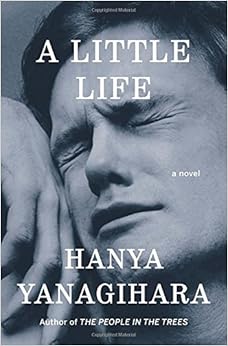
August Selection: Hanya Yanagihara’s A Little Life (Spoiler Alert: This book is not little at all!).
At 736 pages, Hanya Yanagihara’s A Little Life is our biggest book in awhile. Get started soon. The New York Times doesn't much care for it, but Vogue (??) says it's awesome:
"At a time in which big books by women (Eleanor Catton’s The Luminaries; Donna Tartt’s The Goldfinch) have taken the publishing world by storm, Yanagihara’s achievement has less to do with size—though when her editor asked her to reduce it by a third, she refused—than with the breadth and depth of its considerable power, which speaks not to the indomitability of the spirit, but to the fragility of the self."
Slate has declared 2015 to be "the year of the very long novel." Check out their article on big books here.
Is Franzen's new Purity (poised for September release) another biggie? It may well be our September choice.
Tuesday, July 7, 2015
Non-Fiction July:: PBR meets PBS
Apparently the days of two-month PBR Book Club sprees of summer "big books" are a thing of the past. Have we become even lazier than you'd expect from a group of PBR-swilling readers?
But you can still read big books and talk about them: I (Nog) just finished Mathew Thomas' powerhouse We Are Not Ourselves (600 pp) and B-Suit is raving about Hanya Yanagihara's A Little Life (700 pp). We'll talk to you about them.
But the official topic of July's meeting is Steven Johnson's 2014 How We Got to Now. So far I've only read the intro, which is good and has a funny shout-out to the short-lived beauty of Betamax.
If you're feeling extra lazy, just watch the PBS series based on the book.

Tuesday, May 12, 2015
May Selection and Meeting/Skype Announcement: Jeff Jackson's Mira Corpora
After a few months of mainstream and often-divisive selections, May marks a return to the small presses: Jeff Jackson's Mira Corpora, published by Two Dollar Radio. We're excited to be interacting with Jackson on Twitter (@DeathOfLit)and Skyping with him at the next meeting, which is (presumably) Tuesday, May 25 at the Tap. Damn, that's soon! But the book is short and The Raven ordered a few extra copies for us.
Check out Jackson's website here for some tantalizing Mira Corpora reviews, including this blurb from none other than Mr...Don DeLillo: "I hope the book finds the serious readers who are out there waiting for this kind of fiction to hit them in the face.”

Sunday, April 19, 2015
Shadow of the Wind Discussion Rescheduled for THURSDAY April 30
On the off chance that anyone still looks at this blog expecting new content or info, here is an announcement that this month's Shadow of the Wind discussion will take place on Thursday April 30 at 8 at the Tap (instead of our usual Tuesday). No books will be burned at this meeting (if you catch our reference!).


Tuesday, February 24, 2015
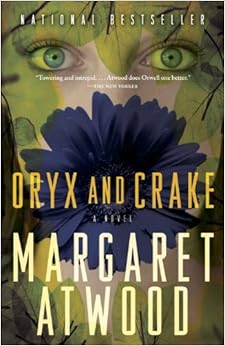
Post-Apocalyptic Musings on Station Eleven and Oryx and Crake: "After all that's happened, how can the world still be so beautiful?"
“ ‘When any civilization is dust and ashes…art is all that’s
left over. Images, words, music. Imaginative structures.’ ” Snowman/Jimmy in Margaret Atwood’s Oryx and Crake
Due to PBR Book Club selections and a recent KU visit from Margaret Atwood, I’ve spent most of 2015 reading post-apocalyptic
novels, a genre I’d mostly avoided since Cormac McCarthy’s The Road, maybe because it’s so omnipresent in literature and film these days. I felt like I knew the tropes well enough. But
I found myself really moved by both Emily St John Mandel’s Station Eleven and (most of) Margaret Atwood’s Oryx and Crake, maybe because they seem
less interested in the well-worn genre details of survival in the wasteland and
more focused on the idea of how one continues to find beauty and meaning in
such a world.
Much of Mandel’s haunting novel follows a band of roving
actors continuing to perform King Lear and a few other repertory works as they move around a
world nearly decimated by a new strain of flu,
Mandel and her characters aren’t given to sweeping proclamations about the
transformative or healing powers of art. There's very little talk of what the tiny audiences may get out of the performances and, for some of the actors, their "mission" seems merely a way of maintaining a small remnant of their
past lives. Yet the book quietly speaks
to the power of art to make sense of a broken world, an idea perhaps best
represented in the volumes of a comic book called Station Eleven, whose plot parallels the characters’ plight. The
comics are carried by one of the characters and gradually revealed to link
numerous, previously disparate, characters over the course of the novel. Ultimately, though, Mandel’s book hit me
hardest not in its big-picture statements about art and humanity but in its
evocation of simple moments that might unexpectedly be your last in a civilization about to crumble or one that has already dissolved. Mandel's paragraphs expertly
bounce us in and out of past and present and future, sometimes allowing us to see looming
disaster that’s just out of sight of her characters. What’s it like to post a
silly Facebook status for the last time? What’s it like to eat what could be
the last orange on the planet? (“This orangeless world.”).
Oryx and Crake is
probably the first Atwood novel I’ve read in close to twenty years, and I was
pleased to find her still angry and often funny as hell. Still didactic too, at times, yet much of the
novel sets up an interesting and complex debate about the power of art, focused around conversations between
the characters Snowman (quoted above, rooted in a liberal arts background) and
Crake, a devotee of science who believes the world would be better off stripped
of pesky human impulses such as falling in (often unrequited) love and “making
art.” Indeed, Crake, who himself oddly becomes a “God-like” figure over the course of the
novel, creates a whole new society of creatures supposedly freed from the
trappings of art and religion. It’s certainly
clear who Atwood sides with in the bigger scheme of things, but Crake is allowed to make provocative points about his vision of a “perfect”
civilization along the way: “Their
sexuality is not a constant torment to them…They would have no need to invent
any harmful symbolisms, such as kingdom, icons, gods, or money.” Some of Crake’s philosophy might even sound
good, in theory, but Atwood suggests that the saddest and most destructive
parts of life (from failed loves to large-scale atrocities) are unavoidable
products of human nature and maybe even essential in that they produce the
greatest art, a concept embodied in perhaps the novel’s most brilliant
invention, a video game called Blood and
Roses in which players can stop humanity’s worst atrocities but only by
sacrificing the world’s greatest artistic achievements. Which will run out
first? (“It was a wicked game,” Atwood writes).
Like Mandel in Station
Eleven, Atwood ultimately allows room for hope and makes time in Oryx and Crake to focus on small human
moments where the characters can still find some temporary solace in their
permanently altered circumstances. Here, for instance,
is Snowman gazing into the distance in the final chapter of Oryx: “On the eastern horizon, there is a grayish
haze, lit now with a rosy, deadly glow. Strange how that colour still seems
tender. He gazes at it with rapture,
there is no other word for it.
Rapture…After everything that’s happened, how can the world still be so
beautiful? Because it is.”

Tuesday, February 3, 2015
First Post of 2015: Let's Get Post-Apocalyptic with Emily St John Mandel's Station Eleven
Folks, this blog (unlike that silly Larryville Chronicles blog) occasionally exists, even though Wikipedia has STILL not seen fit to deem PBR Book Club a real thing worthy of attention. Oh well.
What have we been doing, you ask?
Well, we read David Mitchell's The Bone Clocks in January and most of us liked it, especially LL, though she didn't attend the meeting. Some of us have a special fondness for Mitchell, since his Cloud Atlas was the first -ever selection of the club, way way back in 2011. There were only four of us at that meeting, three of whom were present for the Bone Clocks discussion (we missed you, Abby!).
This month we turn our attention to Emily St John Mandel's moving post-apocalyptic take on art and memory, Station Eleven. Will our members embrace Mandel's honest sentiment, removed from the usual meta trappings of many of our selections? Or will they find themselves nostalgic for a little ironic distance? I'll tell you this, since I've read it already: I cried, and more than once. But I'm a sucker for roving bands of Shakespeareans keeping art alive.
If you're looking to quadruple your post-apocalyptic pleasure with some alternate selections, consider dipping into Margaret Atwood's MaddAddamm trilogy with me. I'm currently midway through the first volume, Oryx and Crake, so you can catch up easily. And hopefully you caught her incredible lecture on campus last night.
See you on Twitter and at the Tap on Tuesday, Feb. 24!
Wednesday, November 5, 2014
Upcoming Reading
As previously announced November will be Colorless Tsukuru Tazaki and His Years of Pilgrimage by Murakami.

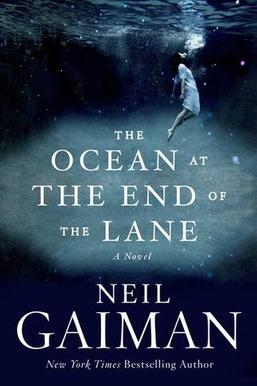
Then December we will be taking it super easy with Neil Gaiman's The Ocean at the End of the Lane.
In January we are getting back to our roots and repeating an author. Back to pretentious reads! We are going for The Bone Clocks by David Mitchell.

Be thinking of books you want to read. Make notes. We will start deciding soon. If not it'll be 300,000,000 by Blake Butler. 464 of murder and repeated use of the word sternum.

Then December we will be taking it super easy with Neil Gaiman's The Ocean at the End of the Lane.
In January we are getting back to our roots and repeating an author. Back to pretentious reads! We are going for The Bone Clocks by David Mitchell.
Be thinking of books you want to read. Make notes. We will start deciding soon. If not it'll be 300,000,000 by Blake Butler. 464 of murder and repeated use of the word sternum.
Tuesday, October 28, 2014
PBR Book Club Makes the New Yorker and Reveals Our November Selection: The Return of Murakami!
First off, we're in the damn New Yorker (!!) today, online at least, thanks to our pal Gary Shteyngart, who recently partied with some of our members in KC and wrote about it in his tour diary. It's a lovely little piece that discusses KC, the Liberty Memorial, and The Day After, and we're happy to be a small part of it. Read it in full here but check out our cameo below:
"The members of Kansas’s P.B.R. (Pabst Blue Ribbon) book club show up. These are serious readers who guzzle beer while discussing books. They take me out for some quasi-artisanal brews and some more baby-back ribs, dripping with sauce. We talk about books and jobs and the strangeness of life in twenty-first-century America. I feel very close to all of them and happy for the company. I wake up the next day with my arms spread out across the bed like a hovering bird."
Next up, November's selection (chosen by Steve, as you might guess) is the new Murakami novel with the not-so-catchy title Colorless Tsukuru Tazaki and His Years of Pilgrimage. This will mark the first time the club has read two books by the same author, since we also tackled Murakami's massive IQ84. This looks much shorter.

Sunday, October 5, 2014
October Selection: Iris Murdoch's The Sea, The Sea
The book club member who chose Iris Murdoch's 1978 The Sea, The Sea for our October selection is...currently overseas. But much of the book club seemed at least mildly interested in reading the book anyway...or too lazy to choose another, despite my earnest pleas for David Mitchell's Cloud Atlas 2 (actual title: The Bone Clocks). Anyway, The Sea, The Sea appears to be about theatre, so that's cool by me. Plus, I've sadly never read Murdoch's work, despite the fact that one of her novels was on my comprehensive exam list. I'm glad there were no questions about that one!
Let's take a look at the original NY-Times review:
"[Murdoch's] stories, including this one, are marked by an uncommon variety and complication of incident; the reader is continually surprised and shocked by the abrupt appearances, disappearances and reappearances of characters, unexpected couplings and uncouplings, sudden shifts into bizarrerie, epiphanies of the spiritual and invasions of the demonic."
Not sure I've ever seen the word "bizarrerie" used before, but I dig it. I'm also pretty sure there are no actual demons in this book.
Let's get reading!
I'm hoping to snag this Penguin Classics edition:

Tuesday, July 29, 2014
September Selection: Rachel Kushner's The Flamethrowers
All right, we originally planned to read Chang-Rae Lee's On Such a Full Sea for September, but those plans were made long ago, and we're kind of bored with all the current dystopian stuff, which is TOO mainstream right now: there's a Dystopian section right next to the Duck Dynasty section at your local bookstores, for fuck's sake.
So let's read something more...real. Something about art. And motorcycles. And the 70's. And sex.
The Guardian's rave review of Rachel Kushner's The Flamethrowers says this:
"This is a book supercharged with ideas – futurism, fascism, Autonomia, industrialisation, American land art, pornography – but Kushner's greatest feat is to pull off an overarching radiant coherence without anything ever feeling pat. It's deeply satisfying, too, that a novel so engaged with radicalism doesn't feel the need to experiment radically with form. A formally conventional narrative that's imaginatively incendiary, it makes any fretting over the state of the novel look plain silly."
:American land art" is so hot right now!! So quit fretting and read up.
Meeting will be held in either Italy, New York, or the Taproom in LFK.
Click here for a good interview with Kushner in The Believer. Interview title: "It's Spelled Motherfuckers."

Saturday, July 19, 2014
July Selection: J. Robert Lennon's Mailman
Yes, we still exist in LFK. We just don't blog much. This month's selection is J. Robert Lennon's corrosive 2003 novel Mailman, chosen by Punnilingus. It's not exactly easy to locate, but it's worth the hassle to order. Presumably the meeting is the 28th?
If you can't find the book, follow @punnilingus on Twitter. He's been tweeting a nice selection of great lines from the book.
"There's a cluster of old Volvos to which sandy-haired, large-hipped women are affixing enormous crinoline tutus."
"She's probably in California, which is where he guesses women with looms go to live"
"They'd have a good laugh about it, & he'd take her home and they'd do it on his cot."
We think Lennon will be back in LFK this fall to do stuff with the library and hang out with us as well.

Tuesday, July 8, 2014
PBR Film Club Examines Borgman: "I'm bored. I want to play."
In Alex van Warmerdam's bizarre, often funny, very unsettling new film Borgman, the title character is chased out of his underground lair and soon insinuates himself into the life of a conventional suburban family. While the husband is instantly (violently) suspicious of the interloper, the wife, Marina, is quickly drawn to him, requesting his continued presence, which he tells her might be possible but only if she's willing to live with "the consequences." These "consequences" will ultimately prove quite high, with a surprisingly hefty body count. Borgman, in many ways, is a more malevolent version of a character common in suburban literature and film: the outsider whose "subversive" views offer the repressed suburbanites a potential escape from their malaise (though sometimes the escape is death). In Mendes' American Beauty, this character is Ricky Fitts, whose personal autonomy inspires Lester and Jane to attempt to free themselves from their suburban shackles. In Richard Yates' Revolutionary Road (and Mendes' film version) this character is John Givings, the mental patient who helps Frank and April see through the artificiality of their lives. While Fitts and Givings don't always seem fully cognizant of their impact, Borgman is a revolutionary, but one who embraces his role as a wicked Trickster figure along the way: "I'm bored," he says. "I want to play." That idea of performance and play runs throughout the film, from Borgman's mid-film identity shift to a strange production he stages in a backyard near the end. Theatre metaphors are consistently used in Yates' novel as well, enhancing the suggestion that the suburbs are just a facade, masking whatever reality might lie behind them or, in Borgman's case, literally beneath them. With his work and "play" done, the film's haunting final passages suggest Borgman will soon descend again (and not alone) until it's time to emerge and wreak more havoc.
Here's a great poster which perfectly suggests some of these themes:

Subscribe to:
Posts (Atom)