Tuesday, May 12, 2015

May Selection and Meeting/Skype Announcement: Jeff Jackson's Mira Corpora


After a few months of mainstream and often-divisive selections, May marks a return to the small presses: Jeff Jackson's Mira Corpora, published by Two Dollar Radio.  We're excited to be interacting with Jackson on Twitter (@DeathOfLit)and Skyping with him at the next meeting, which is (presumably) Tuesday, May 25 at the Tap.  Damn, that's soon! But the book is short and The Raven ordered a few extra copies for us.

Check out Jackson's website here for some tantalizing Mira Corpora reviews, including this blurb from none other than Mr...Don DeLillo: "I hope the book finds the serious readers who are out there waiting for this kind of fiction to hit them in the face.”

 Mira-Corpora-Cover.jpg

Sunday, April 19, 2015

Shadow of the Wind Discussion Rescheduled for THURSDAY April 30


On the off chance that anyone still looks at this blog expecting new content or info, here is an announcement that this month's Shadow of the Wind discussion will take place on Thursday April 30 at 8 at the Tap (instead of our usual Tuesday).  No books will be burned at this meeting (if you catch our reference!).


Tuesday, February 24, 2015

Post-Apocalyptic Musings on Station Eleven and Oryx and Crake: "After all that's happened, how can the world still be so beautiful?"


“ ‘When any civilization is dust and ashes…art is all that’s left over. Images, words, music. Imaginative structures.’ ”  Snowman/Jimmy in Margaret Atwood’s Oryx and Crake

Due to PBR Book Club selections and a recent KU visit from Margaret Atwood, I’ve spent most of 2015 reading post-apocalyptic novels, a genre I’d mostly avoided since Cormac McCarthy’s The Road, maybe because it’s so omnipresent in literature and film these days.  I felt like I knew the tropes well enough. But I found myself really moved by both Emily St John Mandel’s Station Eleven and (most of) Margaret Atwood’s Oryx and Crake, maybe because they seem less interested in the well-worn genre details of survival in the wasteland and more focused on the idea of how one continues to find beauty and meaning in such a world. 

Much of Mandel’s haunting novel follows a band of roving actors continuing to perform King Lear and a few other repertory works as they move around a world nearly decimated by a new strain of flu,  Mandel and her characters aren’t given to sweeping proclamations about the transformative or healing powers of art.  There's very little talk of what the tiny audiences may get out of the performances and, for some of the actors, their "mission" seems merely a way of maintaining a small remnant of their past lives.  Yet the book quietly speaks to the power of art to make sense of a broken world, an idea perhaps best represented in the volumes of a comic book called Station Eleven, whose plot parallels the characters’ plight. The comics are carried by one of the characters and gradually revealed to link numerous, previously disparate, characters over the course of the novel.  Ultimately, though, Mandel’s book hit me hardest not in its big-picture statements about art and humanity but in its evocation of simple moments that might unexpectedly be your last in a civilization about to crumble or one that has already dissolved.  Mandel's paragraphs expertly bounce us in and out of past and present and future, sometimes allowing us to see looming disaster that’s just out of sight of her characters. What’s it like to post a silly Facebook status for the last time? What’s it like to eat what could be the last orange on the planet? (“This orangeless world.”).

Oryx and Crake is probably the first Atwood novel I’ve read in close to twenty years, and I was pleased to find her still angry and often funny as hell.  Still didactic too, at times, yet much of the novel sets up an interesting and complex debate about the power of art, focused around conversations between the characters Snowman (quoted above, rooted in a liberal arts background) and Crake, a devotee of science who believes the world would be better off stripped of pesky human impulses such as falling in (often unrequited) love and “making art.” Indeed, Crake, who himself oddly becomes a “God-like” figure over the course of the novel, creates a whole new society of creatures supposedly freed from the trappings of art and religion.  It’s certainly clear who Atwood sides with in the bigger scheme of things, but Crake is allowed to make provocative points about his vision of a “perfect” civilization along the way: “Their sexuality is not a constant torment to them…They would have no need to invent any harmful symbolisms, such as kingdom, icons, gods, or money.”  Some of Crake’s philosophy might even sound good, in theory, but Atwood suggests that the saddest and most destructive parts of life (from failed loves to large-scale atrocities) are unavoidable products of human nature and maybe even essential in that they produce the greatest art, a concept embodied in perhaps the novel’s most brilliant invention, a video game called Blood and Roses in which players can stop humanity’s worst atrocities but only by sacrificing the world’s greatest artistic achievements. Which will run out first?  (“It was a wicked game,” Atwood writes).
 
Like Mandel in Station Eleven, Atwood ultimately allows room for hope and makes time in Oryx and Crake to focus on small human moments where the characters can still find some temporary solace in their permanently altered circumstances.  Here, for instance, is Snowman gazing into the distance in the final chapter of Oryx: “On the eastern horizon, there is a grayish haze, lit now with a rosy, deadly glow. Strange how that colour still seems tender.  He gazes at it with rapture, there is no other word for it.  Rapture…After everything that’s happened, how can the world still be so beautiful?  Because it is.”


Tuesday, February 3, 2015

First Post of 2015: Let's Get Post-Apocalyptic with Emily St John Mandel's Station Eleven


Folks, this blog (unlike that silly Larryville Chronicles blog) occasionally exists, even though Wikipedia has STILL not seen fit to deem PBR Book Club a real thing worthy of attention.  Oh well.

What have we been doing, you ask?

Well, we read David Mitchell's The Bone Clocks in January and most of us liked it, especially LL, though she didn't attend the meeting.  Some of us have a special fondness for Mitchell, since his Cloud Atlas was the first -ever selection of the club, way way back in  2011.  There were only four of us at that meeting, three of whom were present for the Bone Clocks discussion (we missed you, Abby!).

This month we turn our attention to Emily St John Mandel's moving post-apocalyptic take on art and memory, Station Eleven.  Will our members embrace Mandel's honest sentiment, removed from the usual meta trappings of many of our selections?  Or will they find themselves nostalgic for a little ironic distance?  I'll tell you this, since I've read it already:  I cried, and more than once.  But I'm a sucker for roving bands of Shakespeareans keeping art alive.

If you're looking to quadruple your post-apocalyptic pleasure with some alternate selections, consider dipping into Margaret Atwood's MaddAddamm trilogy with me. I'm currently midway through the first volume, Oryx and Crake, so you can catch up easily.  And hopefully you caught her incredible lecture on campus last night.

See you on Twitter and at the Tap on Tuesday, Feb. 24!


Wednesday, November 5, 2014

Upcoming Reading

As previously announced November will be Colorless Tsukuru Tazaki and His Years of Pilgrimage by Murakami.


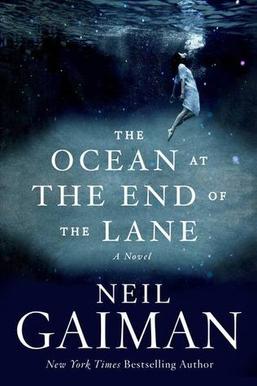
Then December we will be taking it super easy with Neil Gaiman's The Ocean at the End of the Lane.

In January we are getting back to our roots and repeating an author. Back to pretentious reads! We are going for The Bone Clocks by David Mitchell.


Be thinking of books you want to read. Make notes. We will start deciding soon. If not it'll be 300,000,000 by Blake Butler. 464 of murder and repeated use of the word sternum.


Tuesday, October 28, 2014

PBR Book Club Makes the New Yorker and Reveals Our November Selection: The Return of Murakami!


First off, we're in the damn New Yorker (!!) today, online at least, thanks to our pal Gary Shteyngart, who recently partied with some of our members in KC and wrote about it in his tour diary.  It's a lovely little piece that discusses KC, the Liberty Memorial, and The Day After, and we're happy to be a small part of it.   Read it in full here but check out our cameo below:

"The members of Kansas’s P.B.R. (Pabst Blue Ribbon) book club show up. These are serious readers who guzzle beer while discussing books. They take me out for some quasi-artisanal brews and some more baby-back ribs, dripping with sauce. We talk about books and jobs and the strangeness of life in twenty-first-century America. I feel very close to all of them and happy for the company. I wake up the next day with my arms spread out across the bed like a hovering bird."

Next up, November's selection (chosen by Steve, as you might guess) is the new Murakami novel with the not-so-catchy title Colorless Tsukuru Tazaki and His Years of Pilgrimage.  This will mark the first time the club has read two books by the same author, since we also tackled Murakami's massive IQ84.  This looks much shorter.


Sunday, October 5, 2014

October Selection: Iris Murdoch's The Sea, The Sea


The book club member who chose Iris Murdoch's 1978 The Sea, The Sea for our October selection is...currently overseas.  But much of the book club seemed at least mildly interested in reading the book anyway...or too lazy to choose another, despite my earnest pleas for David Mitchell's Cloud Atlas 2 (actual title: The Bone Clocks).  Anyway, The Sea, The Sea appears to be about theatre, so that's cool by me.  Plus, I've sadly never read Murdoch's work, despite the fact that one of her novels was on my comprehensive exam list.  I'm glad there were no questions about that one!

Let's take a look at the original NY-Times review:

"[Murdoch's] stories, including this one, are marked by an uncommon variety and complication of incident; the reader is continually surprised and shocked by the abrupt appearances, disappearances and reappearances of characters, unexpected couplings and uncouplings, sudden shifts into bizarrerie, epiphanies of the spiritual and invasions of the demonic."

Not sure I've ever seen the word "bizarrerie" used before, but I dig it.  I'm also pretty sure there are no actual demons in this book. 

Let's get reading!

I'm hoping to snag this Penguin Classics edition: